

What Brand Activation Looks Like for a B2B Company
For a B2B company, brand activation means putting an established brand direction into market through a coordinated set of brand and marketing campaigns, content, digital marketing and ongoing management. The goal is not simply to appear in more places. It is to help the people involved in a buying decision understand the same clear position wherever they encounter your company—from an initial website visit to a conversation with sales.
That takes more than a launch campaign. B2B buyers may revisit a decision over time, compare options with colleagues and ask different questions as they move toward a purchase. Activation should give marketing and sales a shared message, then make that message useful at each touchpoint.
Why does B2B brand activation need a different plan?
B2B activation must account for the people, questions and timing involved in a business purchase. One person may be assessing the fit of a service, another may need to understand how it will be delivered, and a leader may need a clear business rationale. A single message cannot answer every question, but each answer should reinforce the same position.
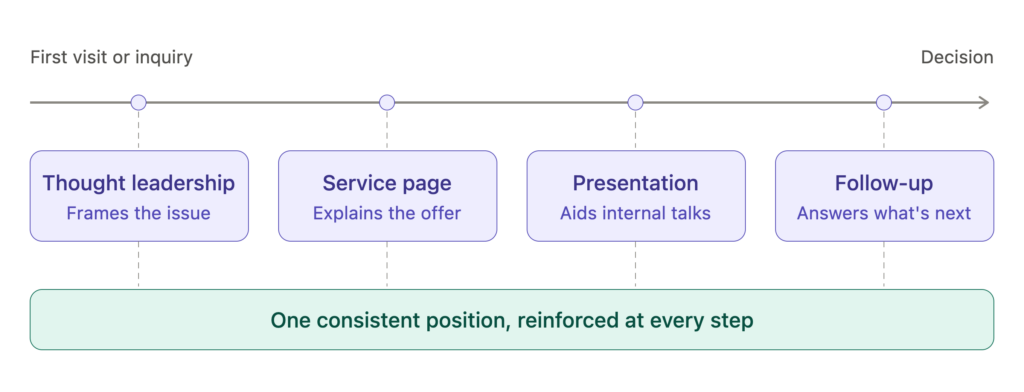
Longer buying cycles also change the job of a campaign. An initial visit or inquiry may be the start of a conversation rather than an immediate sale. Thought leadership can clarify an issue early; a service page can explain the offer; a presentation can help a contact discuss it internally; and relevant follow-up can address the next question without restarting the story. Sales teams can help identify which questions recur and where prospective customers lose clarity.
What needs to be in place before activation?
Start by checking whether your team can explain who the company serves, what it offers, why its approach is distinct and what evidence supports those claims. If those answers vary across leadership, marketing and sales, or they don’t align with leadership’s voice or vision, Brand Strategy needs attention before you scale the message.
Then look at the inputs an activation plan depends on. If any of these are missing or unclear, that’s where REX comes in:
- Audience insight: Knowing the roles involved in a purchase, what each needs to understand and which questions come up at different stages. REX helps validate these assumptions through customer conversations, sales feedback and other research.
- Usable Brand Foundation assets: A website, visual identity, messaging and sales materials that express your position consistently. Brand Foundation is the system of assets and experiences REX builds so activation has something coherent to work with.
- A defined goal: A clear sense of what the work should support, such as better understanding of an offer, more relevant inquiries or better-equipped sales conversations. REX helps you choose a goal the team can actually observe, rather than a vague ambition to ‘do more marketing.’
- A measurement starting point: A record of what you can currently see in website activity, inquiries and sales feedback. REX works with your team to agree on how those signals will be reviewed before adding channels or reporting commitments.
You don’t need all of this in place before you start. Through a Brand Strategy and Foundation engagement, REX fills the gaps that matter most for your objectives and buying journey.
What could B2B activation look like in practice?
Consider a hypothetical Canadian professional services company whose established position is that it helps growing businesses make complex operational decisions easier to explain and act on. Its audience insight suggests that an initial contact needs to recognize the problem, while other stakeholders need to assess the company’s approach before agreeing to a conversation.
The activation plan could translate that position into four connected touchpoints:
- Website: Rewrite the relevant service page so it names the decisions customers face, explains the company’s approach and offers a clear next step. The page should answer practical questions rather than rely on a broad claim about expertise.
- Thought leadership: Publish an article explaining how to assess one of those decisions. It gives early-stage readers a useful way to think about the issue and points them toward the relevant service when they are ready.
- Sales enablement: Give the sales team a presentation that uses the same language as the site, sets out the engagement approach and helps contacts explain it to colleagues. Any proof included would need to be accurate and approved.
- Nurture touchpoints: Plan follow-up content around questions a prospect may have after the first conversation. A useful message might clarify an aspect of the process or direct the reader to a relevant resource; it should not assume every contact is ready to buy.
The common thread is the position, not identical copy pasted into four formats. This example is a planning illustration, not a REX client project or a claim about results.
How do you build a B2B activation plan?
- Confirm the direction. Bring leadership, marketing and sales together around the position, audience and business objective. Record the claims the company can support and the language everyone will use.
- Map the buying questions. List the stakeholders your team encounters, the questions each asks and the touchpoints they use. Note where a prospective customer needs education, comparison material or a direct discussion.
- Audit what already exists. Review the website, content, presentations and follow-up materials against those questions. Keep what works; identify missing or conflicting messages before commissioning more content.
- Choose a connected set of actions. Assign each proposed campaign, content piece or digital activity a specific audience, question and next step. Prioritize the work your team can produce, distribute and maintain rather than filling every channel at once.
- Set ownership and a review rhythm. Decide who approves messaging, who keeps sales materials current and who gathers feedback from customer conversations. Review performance and questions together so the plan can be adjusted as the business learns.
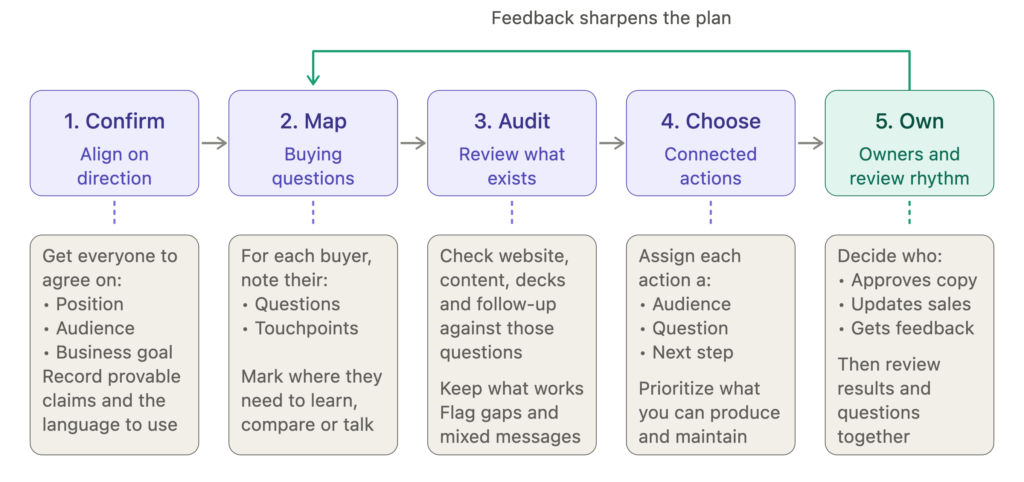
This is how Brand Activation at The REX Agency connects marketing activity to an established strategy and foundation. REX guides you through the decisions that are hard to make alone, then handles the work itself, so your team can stay focused on running the business. The right mix of work depends on what your company needs.
What should a B2B company measure?
Measure whether the planned touchpoints are reaching the intended audience and helping people take a relevant next step. Choose a small set of signals tied to the goal, then review them alongside feedback from sales. Possible measures include:
- Reach and engagement: Visits to relevant service and thought-leadership pages, and engagement with the content the team distributes.
- Useful actions: Relevant inquiries, requests for a conversation or use of a resource intended to support evaluation.
- Sales usefulness: Whether the team uses the materials, which questions they help answer and where explanations still need work.
- Message clarity: Repeated questions, misunderstandings or differences between what prospects expect and what the company offers.
Agree on definitions and a baseline where possible. An increase in page visits alone does not show that the right stakeholders understood the offer, and an inquiry count alone does not explain the quality of a sales conversation. Use the evidence to decide what to refine; do not treat a particular metric as a promised outcome. If your team doesn’t have the time to manage this, REX can take on activation management for you, tracking the results, reporting on what they show and revising the work as you learn.
Which mistakes make activation less useful?
Starting with channels like social media, Google Ads, speaking and networking instead of a position creates activity that may be difficult for buyers or sales teams to connect. Establish what the company needs to communicate before deciding where it will appear.
Treating every stakeholder as the same reader leaves important questions unanswered. Adapt the detail and format to each person’s decision while keeping the central message consistent.
Launching content without sales alignment can leave a gap between the website’s promise and the conversation that follows. Ask sales what customers need to understand, and give the team current materials it can use.
Measuring only immediate inquiries can obscure whether earlier touchpoints are helping people assess the company. Pair action metrics with what you learn from conversations, and allow time to review the full set of touchpoints.
FAQ
Is brand activation the same as a campaign?
No. A campaign can be one part of brand activation, but activation also includes the content, digital touchpoints and ongoing management that carry an established brand position into market. The work should stay connected even when individual campaigns begin and end.
Can a B2B company activate its brand before every asset is finished?
Yes, if the position is clear and the assets needed for the first planned touchpoints are usable. Check for gaps that would make the message inconsistent or leave a prospective customer without an answer; address those before expanding activity.
How do marketing and sales divide the work?
Marketing can plan and maintain the messages and touchpoints, while sales contributes the questions and objections it hears in conversations. Both teams should agree on the position, review the materials and share what they learn; the exact ownership depends on the company’s team.
A useful next step is to identify where your current message first becomes unclear: on the website, in a sales conversation or during follow-up. If you would like a partner to assess that gap and discuss the right scope, inquire with The REX Agency.