

A New Website Won’t Fix an Old Strategy
There’s a familiar sequence that happens when a business knows its marketing needs to change.
“We need more leads.”
“Our competitors are looking more polished.”
“Our brand feels dated.”
“We need to do something about our marketing.”
And then, somehow, that last thought becomes:
“We need a new website.”
Maybe you do. But a new website isn’t necessarily going to solve the problem that led you there in the first place. There are more than 1.8 billion websites on the internet today [source]. So yes, standing out matters. And according to research from Stanford, 75% of people judge a company’s credibility based on the design of its website [source].
Your website absolutely matters. It can shape first impressions, build credibility, make information easier to navigate and give your business a much stronger digital presence. But there’s a difference between making your website better and making your business better at communicating.
A new coat of paint can make a house look great. It doesn’t necessarily fix the plumbing.
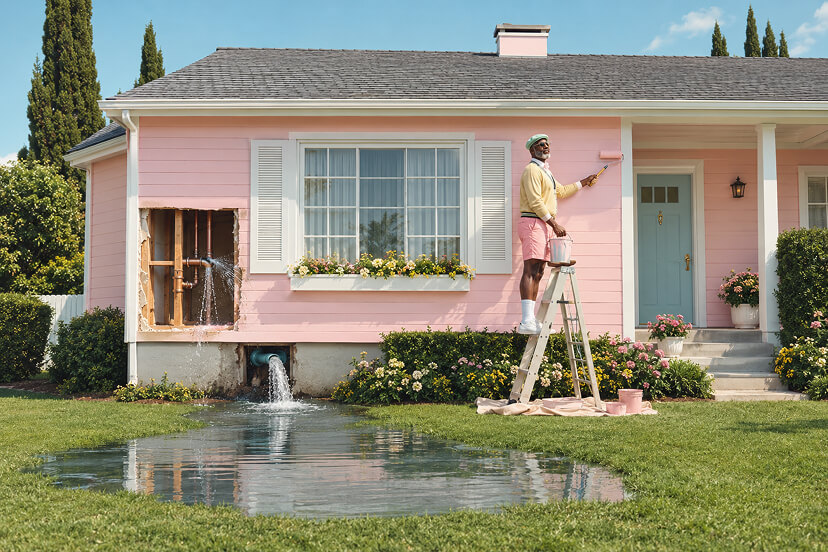
WHAT A NEW WEBSITE ACTUALLY DOES
A well-designed website can do a lot. It can make your business look more credible. It can establish a clear visual hierarchy, make important information easier to find and create a smoother experience for the people trying to interact with you. It can bring an outdated brand into the present and give your marketing a much stronger foundation to build from. Those things aren’t small.
In fact, if your current website is confusing, outdated or difficult to use, a redesign may be exactly what you need. The problem is expecting the website to answer questions that should have been answered before the website was designed. Because a website can organize information, communicate a message, and guide someone toward an action.
What it can’t do is decide what that information, message or action should be.
THE QUESTIONS YOUR WEBSITE CAN’T ANSWER FOR YOU
- Who are you actually trying to reach
- What does each audience need from you?
- What does their journey look like?
- What information will help them make a decision?
- What might be stopping them from taking the next step?
And, perhaps most importantly, what does your business actually need the website to accomplish? More qualified leads? Better conversion? A clearer market position? A better customer experience? A way for existing customers to find what they need without having to call someone?
These questions might sound like website questions, but they’re really business and brand strategy questions. And the answers can have a pretty significant impact on what your website needs to look like, how it needs to be organized and even how your business should structure the experience around different audiences.
Your customers aren’t necessarily one audience just because your business is one company.
A homeowner and a commercial property manager might both be looking for plumbing services, for example. But that doesn’t mean they’re looking for the same information, have the same concerns or make decisions in the same way. Trying to speak to both of them with the exact same experience might be convenient for the business. It doesn’t necessarily make it convenient for the customer.
BEFORE YOU BUILD THE WEBSITE, FIGURE OUT WHAT YOU’RE TRYING TO FIX
One of the biggest problems with website redesigns is that they can begin with a very simple objective:
“The current website doesn’t look good anymore.”
That’s a valid observation. It’s just not much of a strategy.
A redesign should have a reason behind it. Maybe you’re attracting the wrong kinds of leads. Maybe people don’t understand what you actually do. Maybe your positioning has changed. Maybe customers are struggling to find the information they need. Maybe your sales team is constantly explaining things that your website should already be communicating. Or maybe the business has changed significantly since the website was first built, and the digital experience simply hasn’t evolved with it.
These are very different problems. And if you don’t know which problem you’re trying to solve, it’s pretty difficult to know whether the new website is actually solving anything. A website redesign without a defined objective can easily become an expensive exercise in making things look different. And “different” isn’t necessarily the same thing as “better.”
THIS IS WHAT BRAND STRATEGY IS FOR
Not to create a 40-page document that sits on a shelf. Not to come up with a few nice words that sound good in a presentation. Brand strategy is about figuring out what your business needs to say, who it needs to say it to and what needs to happen as a result. That means looking beyond the website itself. We want to understand where the business is going, who it’s trying to reach, how those audiences make decisions and what they actually need from the brand. We look at what’s working, what’s creating friction and where the gaps are between what the business thinks it’s communicating and what people are actually experiencing.
And you need this information from all sides of your business. Leadership sees the business from one perspective. Sales sees what gets people over the line. Marketing sees what’s getting attention. Customer service sees where people get stuck. Customers experience the business from the outside. Each perspective tells you something different.
The way REX approaches brand strategy is by bringing all those perspectives together so the decisions you’re making aren’t based on one person’s assumptions about what customers want.
SKIPPING THE STRATEGY DOESN’T NECESSARILY SAVE YOU MONEY
There’s a reason brand strategy can feel like an extra step. It’s tempting to think, “We already know our business. Let’s just get moving.”
But skipping the strategic work doesn’t necessarily remove the cost. It can just move the cost somewhere else.
Into endless revisions → changing the sitemap halfway through the project → rewriting pages because the messaging isn’t quite right → different stakeholders pulling the website in different directions → realizing halfway through the build that two audiences actually need two very different experiences.
Or, worst of all, into launching the new website and realizing it still hasn’t solved the original problem.
The most expensive website isn’t necessarily the one with the biggest budget. It’s the one you have to redo because you never figured out what it needed to do in the first place.
BRAND STRATEGY GIVES THE WEBSITE SOMEWHERE TO GO
A website should be an expression of your strategy, not the place where your strategy gets figured out by accident. Brand strategy gives you the answers behind the experience: who you’re talking to, what they need, why they should care, what you need them to do and what your business is ultimately trying to accomplish. The website brings those decisions to life. And when those two things work together, the result is more than a prettier version of what you already had. It’s a website built around how your business actually works, who you’re trying to reach and where you’re trying to go.
So before you brief someone on a new website, it might be worth asking a few questions first.
- Who are we actually trying to reach
- What does each audience need from us?
- What isn’t working about the current experience?
- What are we actually trying to change?
- And is a new website really the answer?
You might find that it is. You might also find that the website was never the whole problem.
If you’re feeling a little lost on what to do next with your marketing, it might be worth taking a step back before you start building something new.
At REX, we help businesses figure out what’s actually getting in the way, bring the right people into the conversation and turn those insights into brands, websites and marketing built around where the business is going.
Before you start redesigning, book a complimentary Needs Assessment with REX today.